use case · orchestration
GTM Bot
Meeting prep, prospecting, account rundowns, live slides. Drafts only. Never sends.
Krista Letz runs Enterprise GTM at SpaceXAI. When the company was dogfooding Grok Bot internally it spread fast, and she wrote an internal Notion doc on how she used it so the rest of GTM could copy the seats. This is that doc, public. Most of her day is on calls. The evening used to be catch-up admin — follow-ups, Salesforce, prospecting. The bots took that block. She spends the time in front of customers.
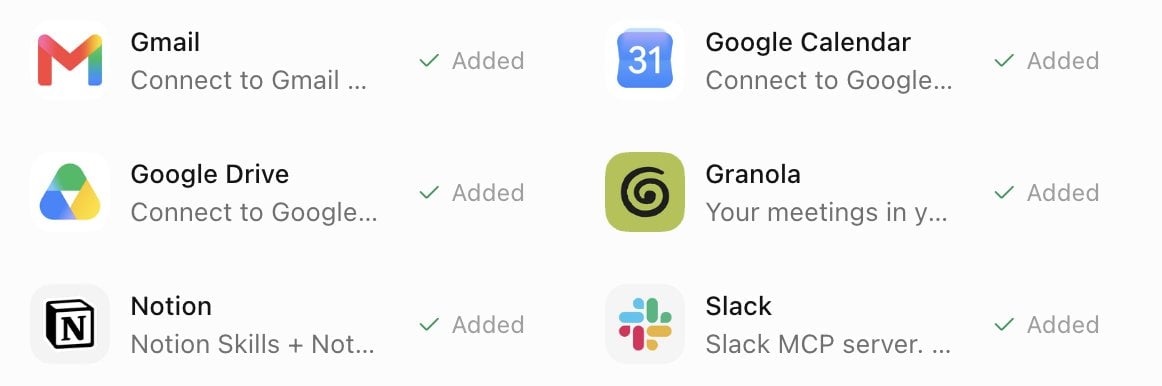
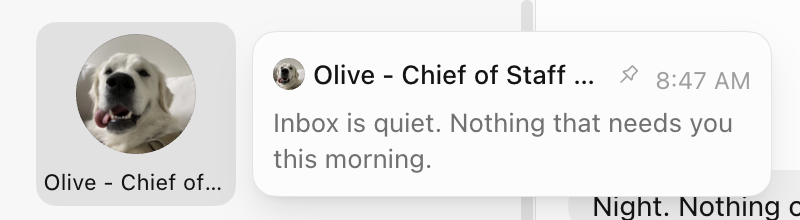
She pins Chief of Staff in the sidebar and uses it most. CoS owns meeting prep, inbox and post-call drafts, and can spin up the rest of the team. Daily meeting prep is a routine: Salesforce, Gmail, Slack, Granola, Gong, or web research if the meeting is new, returned as a short skimmable she can read on her phone commuting. If the call needs a deck, CoS calls the slides bot.
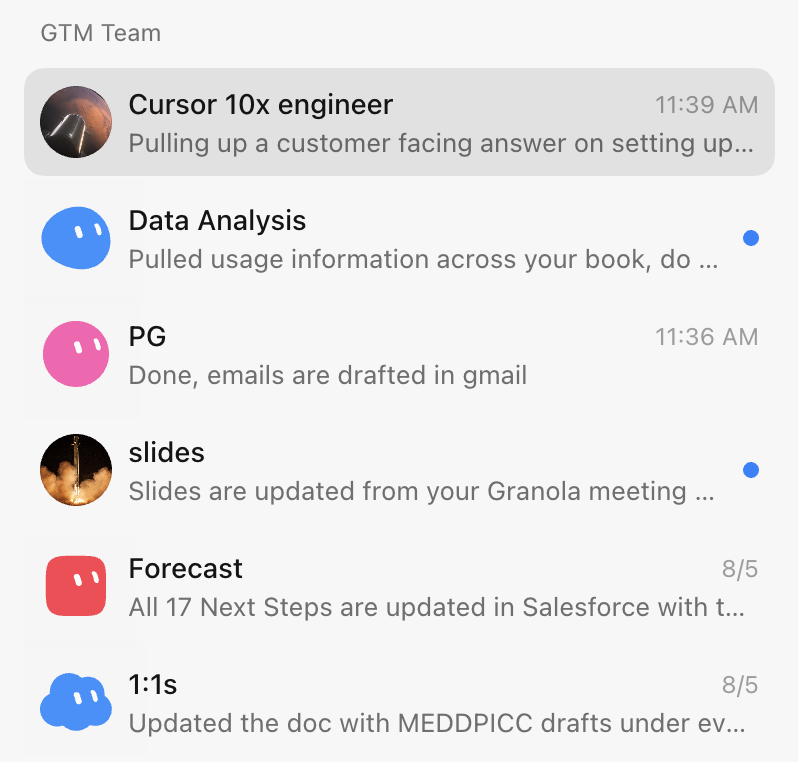
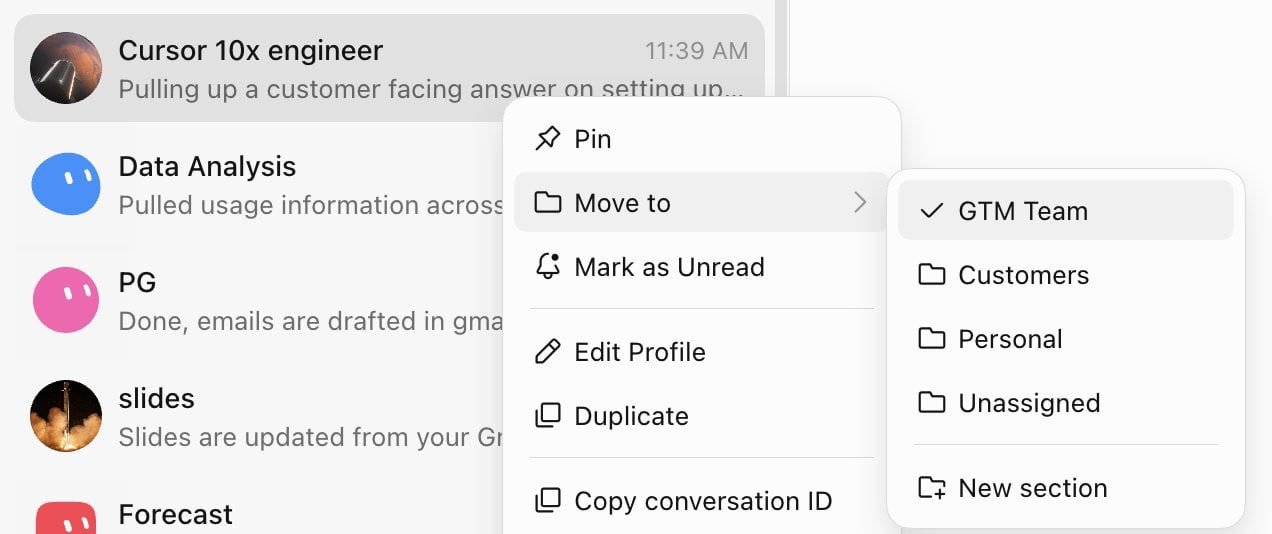
The rest of the roster is specialized. Prospecting bot builds pipeline-gen plans overnight: pulls accounts she owns with no active mid-funnel opp, learns her voice from 15–30 sent messages, enriches with compelling events and actual podcast/talk takeaways (or writes "no verifiable recent posts found"), drafts email and a shorter LinkedIn note off the same hook, and shows 2 or 3 pairs for approval before generating the full batch. Anyone already touched in the last 90 days is Skip Draft — kept on the sheet, not re-pitched. Customer expert is one agent per strategic account: Slack, calls, email, a weekly media rundown that actually consumes the webinar or podcast, feature requests, support tickets, relevant new features. Data analysis tracks usage across the book. Product expert ("10x engineer") is connected to the codebase so a technical question on a live call does not require finding an engineer. 1:1 agent preps the weekly manager sync from Granola. Forecasting bot pulls Granola, Gong, Slack, and email and auto-updates Salesforce opportunity notes in her format. Slides owns customer decks in Figma off the brand system and a master deck; favorite skill is rewriting the "What we've heard" slide live from Granola, five or ten minutes before the call ends, so she wraps with a slide built from what the customer just said. Sales Coach watches external Gong calls and gives feedback.
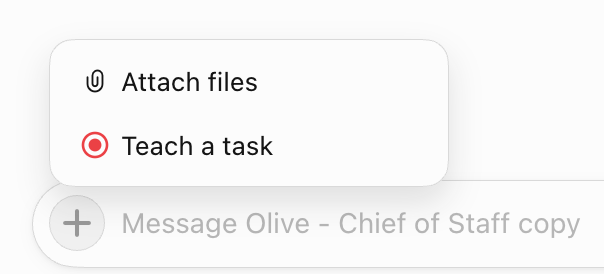
What she had to teach: onboard it like a new teammate. First time through a task she hits record, takes over the computer, demonstrates, then has the bot turn the recording into a skill — she showed it how she researches stakeholders on X. Feed it sent mail before it drafts. She keeps an anti-slop skill and appends to it every time she steers. CoS is also asked to look at the whole roster and cut unnecessary routines.
Approvals are the fence. Inbox scan: proposed replies, do not auto-send. Prospecting: drafts only, 2–3 pairs before the batch, never treat warm pipeline like a cold list. Slides: edit in place and show her the result. Follow-ups from Granola/Gong stay in chat with To, Subject, and body. She does not need to babysit output every week the way she did with other tools. She still sends.
Official guide on x.ai.